Indoor Activities for Kids
7 Screen-Free Indoor Activities for Kids on Rainy Days
Rainy days do not have to mean another day of scrolling or watching videos. With a few simple materials and a little imagination, children can enjoy screen-free activities that encourage creativity, movement, observation, and family connection.
Whether you are planning a quiet afternoon at home, a playdate, or a family game night, these indoor activities for kids are easy to adapt for different ages and interests.
1. Create an Indoor Discovery Station
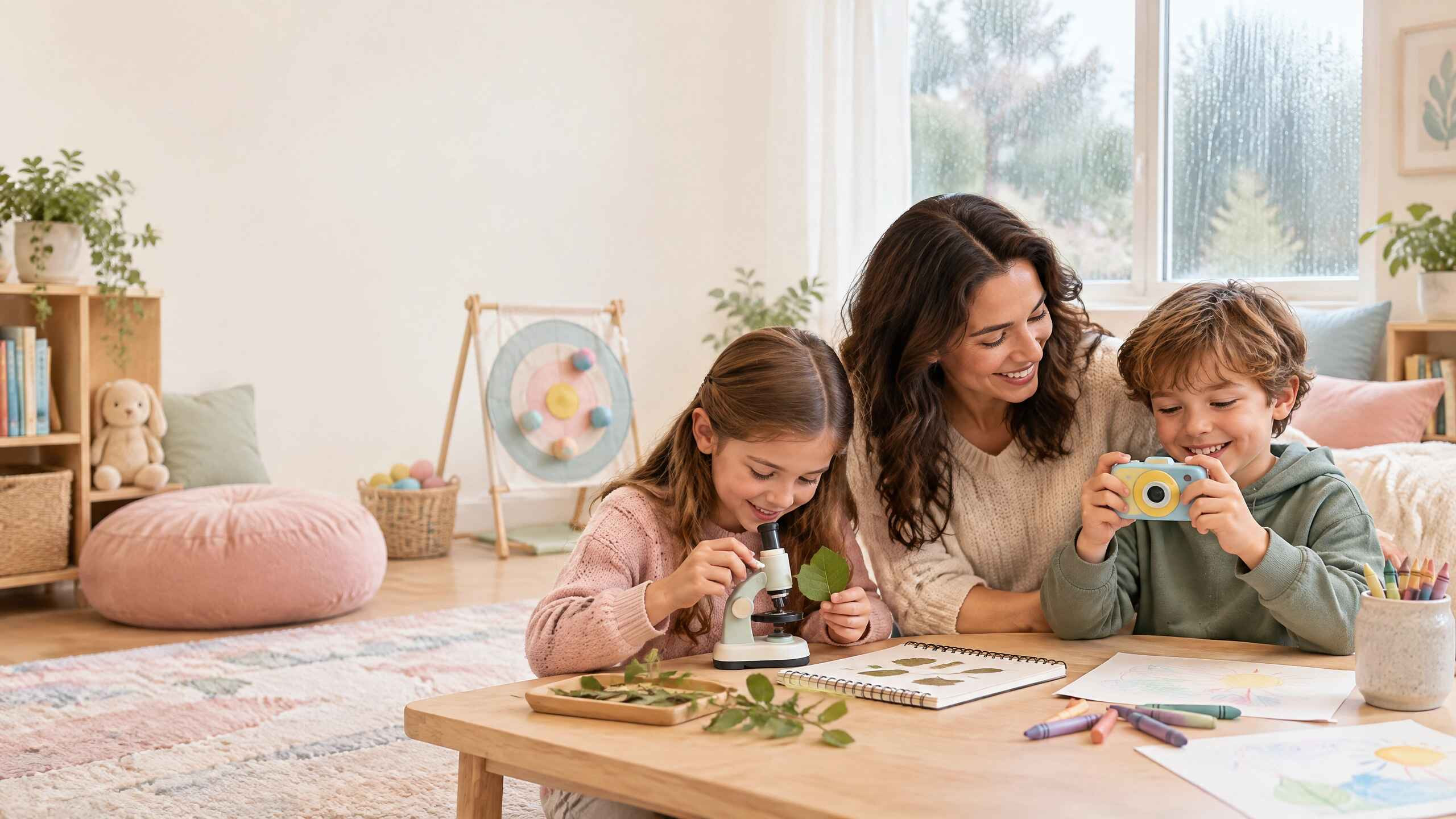
Turn a small table into a temporary discovery station. Invite children to collect safe, dry objects from around the home, such as leaves, fabric, paper, cardboard, or smooth stones. Ask them to sort the objects by color, texture, size, or shape.
For older children, add a notebook and encourage them to record what they notice. They can draw each object, write three describing words, or predict which object will feel roughest or smoothest.
A beginner microscope can make this activity more engaging by helping children look closely at textures and surfaces. Use the microscope with adult guidance and choose clean, non-living objects that are safe to observe.
- What details can you see up close?
- Which object has the most interesting texture?
- How does the object look different when viewed closely?
2. Host a Family Target-Game Challenge
A simple target game can turn a living room or playroom into an active indoor activity. Set up a sticky-ball dart board securely in an open area, mark a safe throwing line, and create an easy scoring challenge.
You can play individually, in teams, or as a family. Younger children can practice colors and counting, while older children can add scores, create new rules, or design a tournament chart.
Use only the soft balls supplied with the game. Do not substitute sharp darts or hard objects. Keep the play area away from windows, breakable items, pets, and people who are not playing. Adult supervision is recommended, especially when small parts are present.
Shop the Kids Sticky-Ball Dart Board
3. Make a Family Photo Story
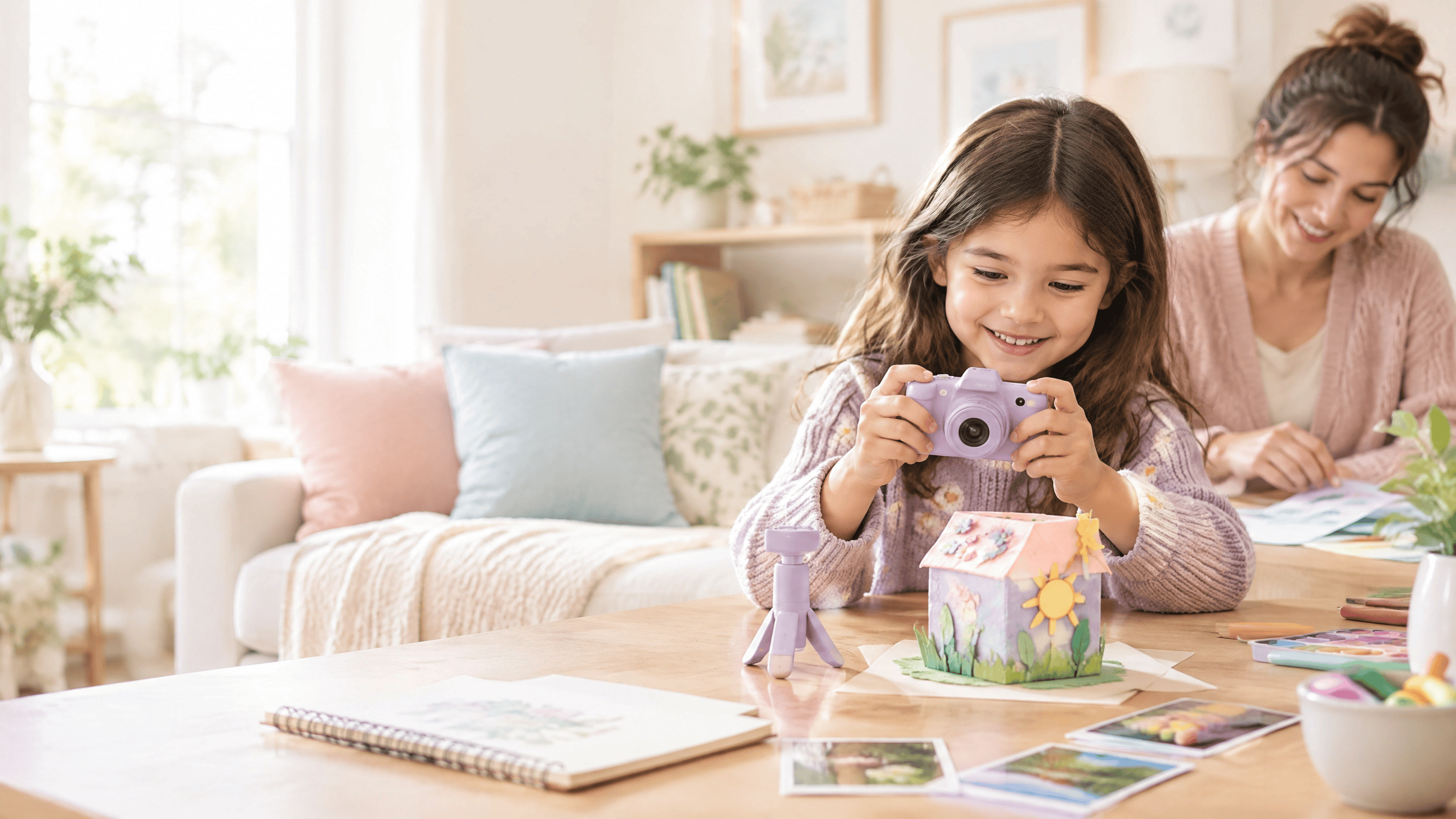
Give children a simple storytelling challenge: create a photo story with five to ten pictures. They can photograph a favorite toy, a room, a craft project, or a pretend adventure.
Help them plan a beginning, middle, and ending. For example, a toy might go on an adventure, discover something unexpected, and return home with a souvenir or lesson.
Children can arrange the photos in order and explain the story to the family. This activity combines creative writing, sequencing, communication, and photography.
A kids digital camera can be useful for supervised creative play. Before use, review the instructions and supervise charging, cables, lanyards, and other small accessories.
Shop the Kids Digital Camera with Stand
4. Build an Indoor Obstacle Course
Use cushions, masking tape, pillows, cardboard boxes, and chairs to create a simple obstacle course. Children can crawl under a safe passage, step over a line, balance along a taped path, or toss a soft object into a basket.
Keep the course away from stairs, sharp furniture edges, glass, and slippery surfaces. Leave plenty of space between activities and adjust the difficulty to the child’s age and ability.
You can add learning challenges to each station: name a color, count ten steps, solve a simple addition problem, spell a short word, or tell one thing they are grateful for.
5. Start a Rainy-Day Art Lab
Set up a small art area with paper, crayons, washable markers, cardboard, glue, and recycled materials. Offer a prompt instead of a finished example so children can make their own choices.
- Design a house for an imaginary animal.
- Draw a map of a secret island.
- Make a paper invention that solves a household problem.
- Create a character and write three facts about them.
- Make a collage using only three colors.
Try displaying the finished work in one area of the home. Showing interest in the process is often more valuable than judging the final picture.
6. Make a Simple Observation Journal
An observation journal is an easy screen-free learning activity for children who enjoy asking questions. Choose a subject that can be observed safely indoors, such as a houseplant, a toy, a piece of fabric, or a cup of water with ice.
Ask children to record what they see, what changes over time, what questions they have, and what they predict will happen next. Younger children can draw pictures instead of writing sentences.
This activity helps children practice careful observation without turning the experience into a formal lesson.
7. Plan a Family Game-Night Rotation
Instead of playing one game for the whole evening, create a short rotation with several activities:
- Ten minutes of a target game.
- Fifteen minutes of drawing.
- Ten minutes of a building challenge.
- Fifteen minutes of a family quiz.
- A final storytelling activity.
Let each family member choose one activity. Children enjoy the sense of ownership, and adults can introduce games that practice counting, memory, teamwork, or communication.
How to Choose the Right Screen-Free Activity
The best activity depends on the child’s age, attention span, interests, and available space. A creative child may prefer photography or art. A child who likes movement may enjoy an obstacle course or target game. A curious child may prefer an observation journal or microscope activity.
Before starting, check that:
- The materials are appropriate for the child’s age.
- Small parts are kept away from children who may put them in their mouths.
- Cords, chargers, and straps are used with adult supervision.
- The play area is clear of breakable or dangerous objects.
- Instructions and manufacturer age guidance are followed.
Final Thoughts
Screen-free indoor activities do not need to be complicated or expensive. A notebook, a few household materials, and a creative question can be enough to start an afternoon of discovery.
The most important part is giving children time to explore, make choices, and share what they created. Whether they are taking pictures, investigating textures, practicing aim, or inventing a story, small activities can create meaningful family moments at home.
Frequently Asked Questions
What are good screen-free activities for kids indoors?
Good options include indoor obstacle courses, art projects, observation journals, target games, family storytelling, photography challenges, and supervised science activities. Choose an activity that matches the child’s age, interests, and available space.
What can kids do on a rainy day without screens?
Children can create art, build a safe obstacle course, play a family target game, make a photo story, observe everyday objects, or organize a family game-night rotation.
How can I make indoor activities educational?
Add simple questions and challenges. Ask children to sort objects, count points, describe textures, sequence pictures, record observations, or explain how they solved a problem.
Are screen-free activities suitable for toddlers?
Some activities can be adapted for toddlers, but they require close adult supervision. Avoid small parts, loose balls, cords, and materials that could be placed in the mouth. Follow the age guidance provided by the product manufacturer.
How do I keep a child interested in an indoor activity?
Offer choices, keep the first activity short, and let the child change the rules or add creative ideas. Children are more likely to stay engaged when they have an active role in choosing and shaping the activity.